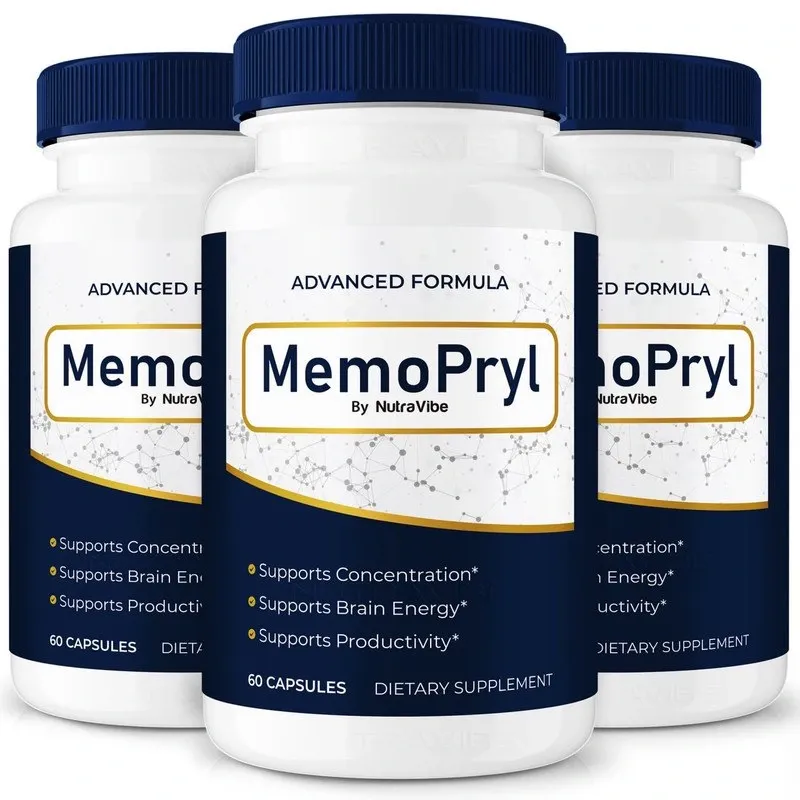
Memopryl Benefits: Concentration, Brain Energy and Productivity
Quick answerMemopryl is made to support concentration, brain energy and productivity.
The best ingredient evidence is for bacopa, which improved learning in 46 healthy adults after 12 weeks at 300 mg a day. It is not an instant boost and does not replace sleep or good habits.
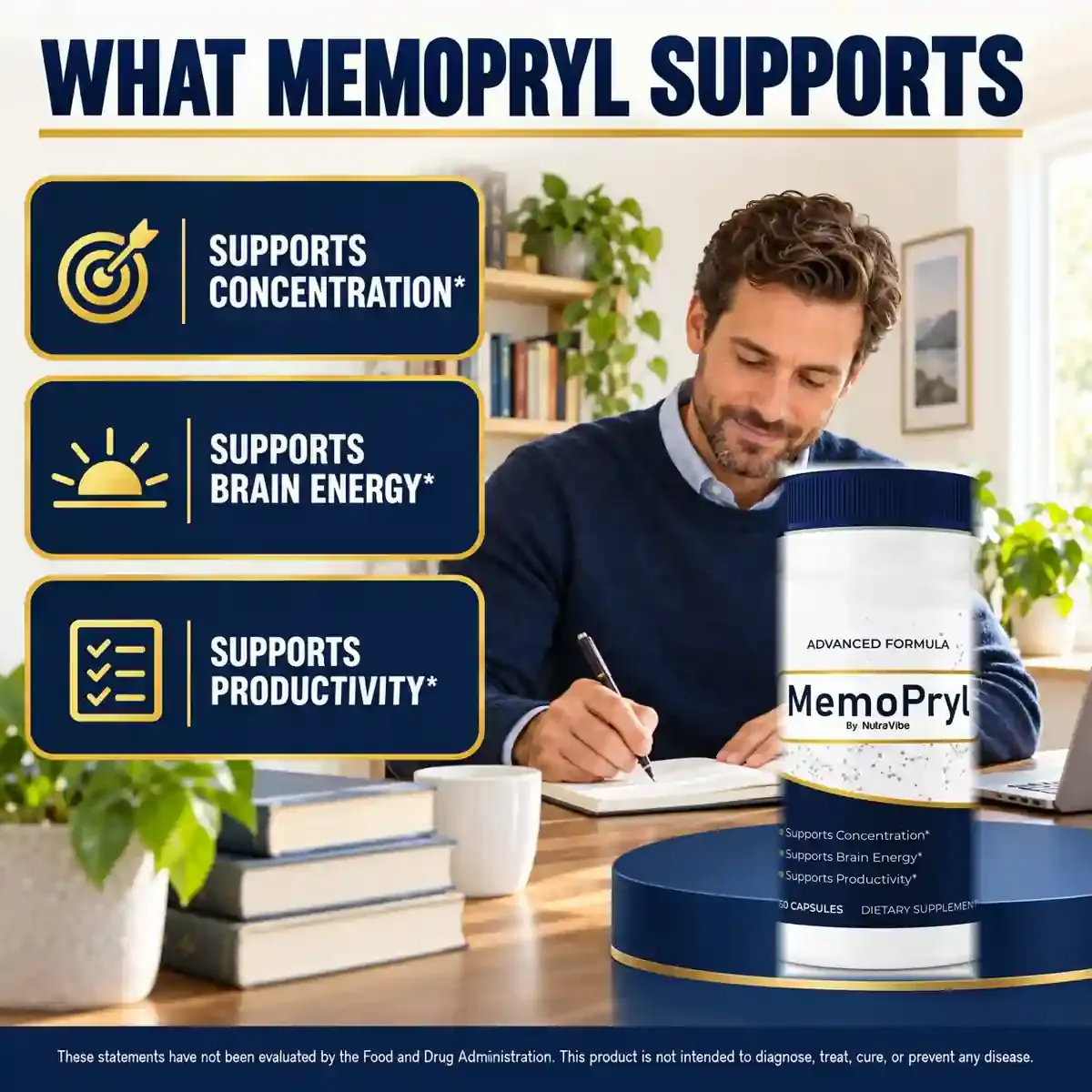
What are the benefits of Memopryl?
Memopryl makes three claims on the front of its bottle. It supports concentration, supports brain energy and supports productivity. Each claim carries an asterisk tied to the FDA statement.
These are support claims about normal function. They are not promises of results. Each claim is paired below with what research on the ingredients shows, so you can set fair expectations.
What does the brand say Memopryl supports?
Three areas, one daily capsule
The brand frames Memopryl around three ideas. Concentration is about holding attention. Brain energy is about feeling mentally fresh. Productivity is about getting work done.
These three overlap in daily life. Better focus often leads to more done. The six ingredients behind them are listed on the Memopryl ingredients page.
How does Memopryl support concentration?
Concentration is the claim with the best ingredient support. It rests mostly on bacopa, listed on the pack as Brahmi.
In a placebo-controlled trial, 46 healthy adults took 300 mg of bacopa extract a day for 12 weeks. Their learning rate, memory consolidation and speed of processing improved more than with placebo (Stough et al., 2001). The gains appeared at 12 weeks, not sooner.
Phosphatidylserine adds a second thread. In 78 adults aged 50 to 69 with memory complaints, 100 or 300 mg a day for 6 months raised memory scores (Kato-Kataoka et al., 2010). That group was older than most people shopping for focus at work.
What does "brain energy" mean on the label?
"Brain energy" does not mean a caffeine-style lift. None of the six named ingredients is a stimulant. The idea is steady support over weeks.
The ingredient most linked to energy is N-acetyl L-carnitine. Carnitine helps cells carry fats into the parts that make energy. In memory studies, people took 1.5 to 3 g a day of acetyl-L-carnitine for 3 to 12 months (NIH ODS, Carnitine).
The results in people were weak. A review of 16 trials found no evidence to recommend it for routine use in dementia (Hudson & Tabet, 2003 (Cochrane)). So this claim leans on a sound idea more than strong trial data.
How could Memopryl support productivity?
Productivity is the broadest claim. No study has measured work output with these ingredients. It is best read as the hoped-for result of better focus and steadier energy.
For most people, productivity depends on sleep, workload and how often they are pulled away from a task. A daily capsule can be one part of that routine. It cannot do the work of the other parts. The habit tips further down this page cover them.
A fair way to judge this claim is to track something concrete. Count the tasks you finish, or note how long you can work before you drift. Compare a normal week before you start with a week after several weeks of use.
Which ingredients back each claim?
| Label claim | Main ingredients | What research shows | Strength of evidence |
|---|---|---|---|
| Supports Concentration* | Bacopa, phosphatidylserine | Bacopa improved learning and memory consolidation in healthy adults at 12 weeks | Moderate for bacopa |
| Supports Brain Energy* | N-acetyl L-carnitine, phosphatidylserine | Carnitine helps cells use fats for energy; memory trials were weak | Limited |
| Supports Productivity* | The whole formula | No trial has measured productivity with these ingredients | Not studied |
What does Memopryl not do?
Knowing the limits helps you judge Memopryl fairly. The three claims are about everyday support, and nothing more.
What it does not do
Memopryl does not treat, cure or prevent dementia, Alzheimer's disease, ADHD or depression. It does not give instant results. It is not a replacement for sleep, and it does not replace any medicine your doctor has prescribed.
If you notice real changes in your memory, talk with a doctor (NIA, memory and aging).
Which daily habits help focus?
Simple habits shape focus more than any supplement. They cost nothing and pair well with a daily capsule. Pick one or two to start.
Protect your sleep
A regular bedtime and enough hours give the brain what no capsule can.
Move each day
A short walk or light exercise can help you feel more alert for the next task.
Drink and eat well
Regular meals and water help avoid the mid-afternoon slump.
Cut the pings
Turn off alerts during deep work. Each interruption costs time to refocus.
Plan the top task
Pick one main task for the morning and start with it before email.
Take short breaks
Step away every hour or so. A few minutes off can make the next block sharper.
More ideas for building a focus routine are in the focus and brain energy guide.
When might you notice a difference?
No timeline has been promised for Memopryl. The ingredient trials ran from 12 weeks for bacopa to 6 months for phosphatidylserine. That points to weeks of steady use rather than days.
In the retailer's review pack, buyers most often mention waiting 3-4 weeks. Those figures were supplied by the retailer and have not been independently verified. A week-by-week view is on the Memopryl results timeline.
How can you get the most from a daily capsule?
Follow the label
Take the serving printed on your bottle, as it directs. The serving size is not published in our files.
Keep one time slot
Tie the capsule to something you already do each day, like breakfast or your first glass of water.
Note a baseline
Before day one, jot down how your focus feels on a normal workday. It makes later changes easier to spot.
Check in weekly
Rate focus and energy once a week. Look for a trend, not a single good or bad day.
Is mood one of the benefits?
No. Memopryl makes no mood claim. St. John's wort, one of its six ingredients, is studied for mood at 900 mg a day (StatPearls, St. John's Wort). The amount in Memopryl is not published, and the brand does not market it for mood.
The herb matters here for another reason. It changes how many medicines work, so a quick check with a pharmacist comes before the first capsule. Details are on the Memopryl safety page.
What do buyers say they like?
The retailer's review pack gives Memopryl a 4.8 out of 5 from 1,397 written reviews. Buyers most often praise the simple daily capsule and the 60-day window. The most common complaint is a slow start, with some wanting more in the first week.
These figures were supplied by the retailer and have not been independently verified. They fit the research, though: benefits from these ingredients tend to build slowly, not in the first week.
How strong is the evidence overall?
Federal health sources say there is no conclusive evidence that ginkgo prevents or slows cognitive decline. They also say direct evidence for natural products and thinking skills is lacking (NCCIH, supplements and cognition).
For Memopryl in particular, two more gaps apply. No trial of the full formula has been published. The amount of each ingredient is also not published, so no dose can be compared with the studies. The fair test is your own experience, judged inside the 60-day refund window.
Who is most likely to value Memopryl?
Memopryl is made for healthy adults who want a simple daily capsule for focus and brain energy. It suits people who can give it several weeks and who already look after sleep and routine.
It is not a fit for anyone under 18. Anyone on prescription medicine should check with a doctor or pharmacist first, because of the St. John's wort. The full fit check is on who Memopryl is for.
Memopryl benefits FAQ
What are the main benefits of Memopryl?
The label says it supports concentration, brain energy and productivity. These are support claims, and no trial of the finished formula has been published.
Will Memopryl help me focus at work?
It is designed to support concentration. Bacopa, one of its ingredients, improved learning in healthy adults after 12 weeks, but results vary and habits matter too.
Does Memopryl give an energy boost like coffee?
No. None of its named ingredients is a stimulant. "Brain energy" on the label refers to support over time, not a quick lift.
Can Memopryl help with ADHD or depression?
No. Memopryl is not made to diagnose, treat or prevent any condition. Speak with a doctor about ADHD, low mood or memory problems.
How soon will I notice Memopryl benefits?
No timeline is promised. The bacopa trial saw changes at 12 weeks, and buyers in the retailer's review pack most often mention 3-4 weeks.
Is Memopryl good for memory loss?
Memopryl makes no memory-loss claim. Noticeable changes in memory should be checked by a doctor rather than handled with a supplement.
Can I take Memopryl if I sleep badly?
You can ask your doctor, but no capsule makes up for short sleep. Sleep is one of the strongest drivers of focus.
Ready to try Memopryl?
60 capsules per bottle, prices shown at checkout, and a 60-day money-back guarantee. Contains St. John's wort, so check your medicines first. Questions? Call +1 (302) 200-3480.