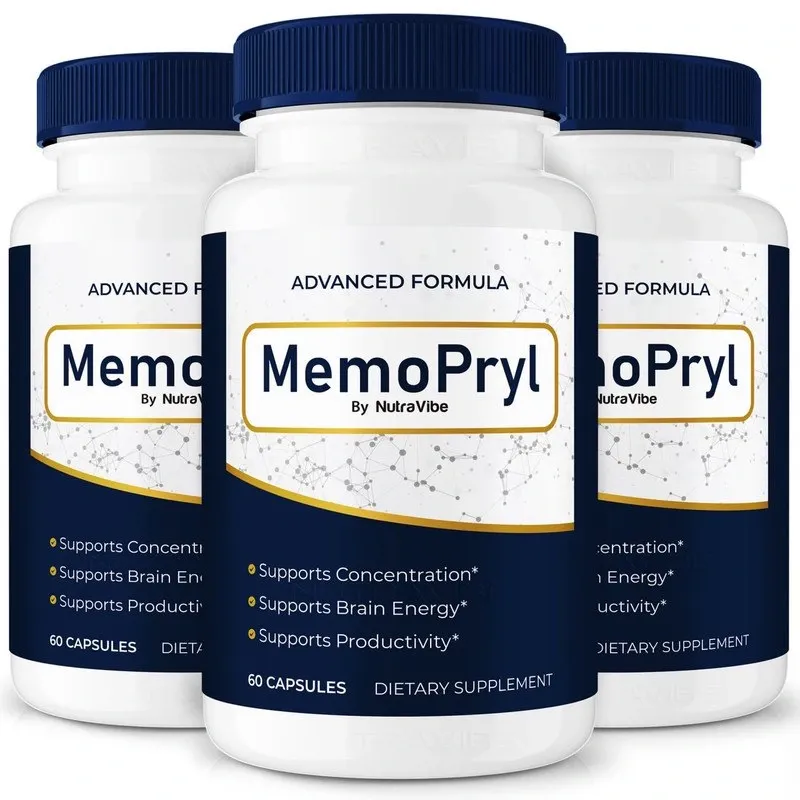
Memopryl Guides: Where to Start Reading About Focus and Brain Energy
Quick answerThe Memopryl library holds 2 long guides and 3 articles. New to the topic? Start with the focus and brain energy guide. Comparing products? Open the buying guide. Taking any medicine? Read the St. John's wort article first. Every piece links its sources and marks missing label facts as not published.
Which two long guides should I read first?
One explains focus and energy. The other helps you shop with care.
Two long guides form the core of the library. One covers what focus and mental energy are, and which daily habits support them. The other is a checklist for judging any focus supplement before you buy.
Plan on 10 to 15 minutes for each. Both link the studies they use and say plainly where the research runs thin.
Focus and brain energy guide
How attention works through a workday, why sleep and breaks matter, and what the named ingredients were studied for.
Read the guideChoosing a focus supplement
A step-by-step way to read a label, weigh the evidence, check the seller and read refund terms. It works for any brand.
Read the buying guideWhat do the three articles cover?
Each one goes deep on a single topic. The full list lives on the blog.
The articles are shorter and narrower than the guides. Each one picks a single question readers keep sending us and answers it with sources.
Two of them focus on ingredients with real safety or evidence stakes. The third helps you judge a label when the numbers are missing.
St. John's wort and your medicines
Why this herb weakens birth control, warfarin and many other drugs, and what serotonin syndrome is.
Read the articleGinkgo biloba: what the big trials found
The 6-year GEM trial in 3,069 older adults, what it tested and why it matters for everyday buyers.
Read the articleReading a label without amounts
What a Supplement Facts panel must show by law, and how to judge a product when the numbers are missing.
Read the articleReading paths: what should I read for my goal?
Pick the row that fits your question and read left to right.
| Your goal | Start with | Then read | Time |
|---|---|---|---|
| Understand focus and mental energy | Focus and brain energy guide | What Memopryl is made to support | 15 min |
| Compare products before buying | Buying guide | Packs and pricing | 15 min |
| Check safety with your medicines | St. John's wort article | Side effects | 10 min |
| Learn what ginkgo can and cannot do | Ginkgo trials article | Ingredients | 8 min |
| Make sense of a label with no amounts | Label reading article | Supplement Facts | 8 min |
| Plan a fair personal trial | Results timeline | 60-day guarantee | 8 min |
| Decide if it fits your situation | Who it is for | How to use | 6 min |
Who are the guides written for?
The guides are written for busy adults who want clearer focus at work and at home. Some readers are weighing their first supplement. Others already take medicines and want to check for problems first.
You do not need to buy anything to use them. The label checklist and the medicine notes apply to any product you are considering.
Taking medicine?
If you take a prescription drug, read the St. John’s wort article before any product page. It explains which questions to ask your pharmacist.
Quick primers: which six ideas come up again and again?
Each one takes about a minute.
Why is a focus supplement not a medicine?
US law treats dietary supplements as a type of food. The FDA does not approve them before they go on sale (FDA, Q&A on Dietary Supplements). In 2019 it warned 17 companies for illegal Alzheimer's claims on more than 58 products (FDA, Alzheimer's claims, 2019).
A supplement label may say “supports.” It may not say “treats” or “prevents” a disease.
Why does St. John's wort need a medicine check?
St. John's wort speeds up the enzymes that clear many drugs from the body (StatPearls, St. John's Wort). Birth control pills, warfarin, digoxin and some HIV drugs can then work less well (NCCIH, St. John's Wort).
With antidepressants, it can cause serotonin syndrome. A five-minute talk with a pharmacist covers most of this.
What does a Supplement Facts panel have to list?
Federal rules say the panel must show the serving size and each ingredient's amount, or a blend's total weight (21 CFR 101.36).
That panel was not in our files for Memopryl. So we cannot state a dose, and we tell you to read the one on your bottle.
When should memory changes go to a doctor?
Noticeable changes in memory deserve a doctor visit, and pills that promise better memory deserve caution (NIA, memory and aging).
Some causes, such as poor sleep or a medicine side effect, can be found and fixed.
What did the largest ginkgo trial show?
In the GEM trial, 3,069 adults aged 75 and over took 240 mg of ginkgo a day for a median of 6.1 years (DeKosky et al., 2008 (GEM)). Dementia rates were no lower than with placebo.
Ginkgo may also raise bleeding risk with blood thinners (NCCIH, Ginkgo). Both points shape how we write about it.
Why do bacopa studies last 12 weeks?
Bacopa seems to act slowly. In one trial, 46 healthy adults took 300 mg a day, and learning and memory gains showed up only at 12 weeks (Stough et al., 2001).
So a few days of any bacopa product tells you very little. The guides use this to set fair expectations.
Which Memopryl product pages go with the guides?
These pages apply the guides to one bottle of capsules.
Ingredients
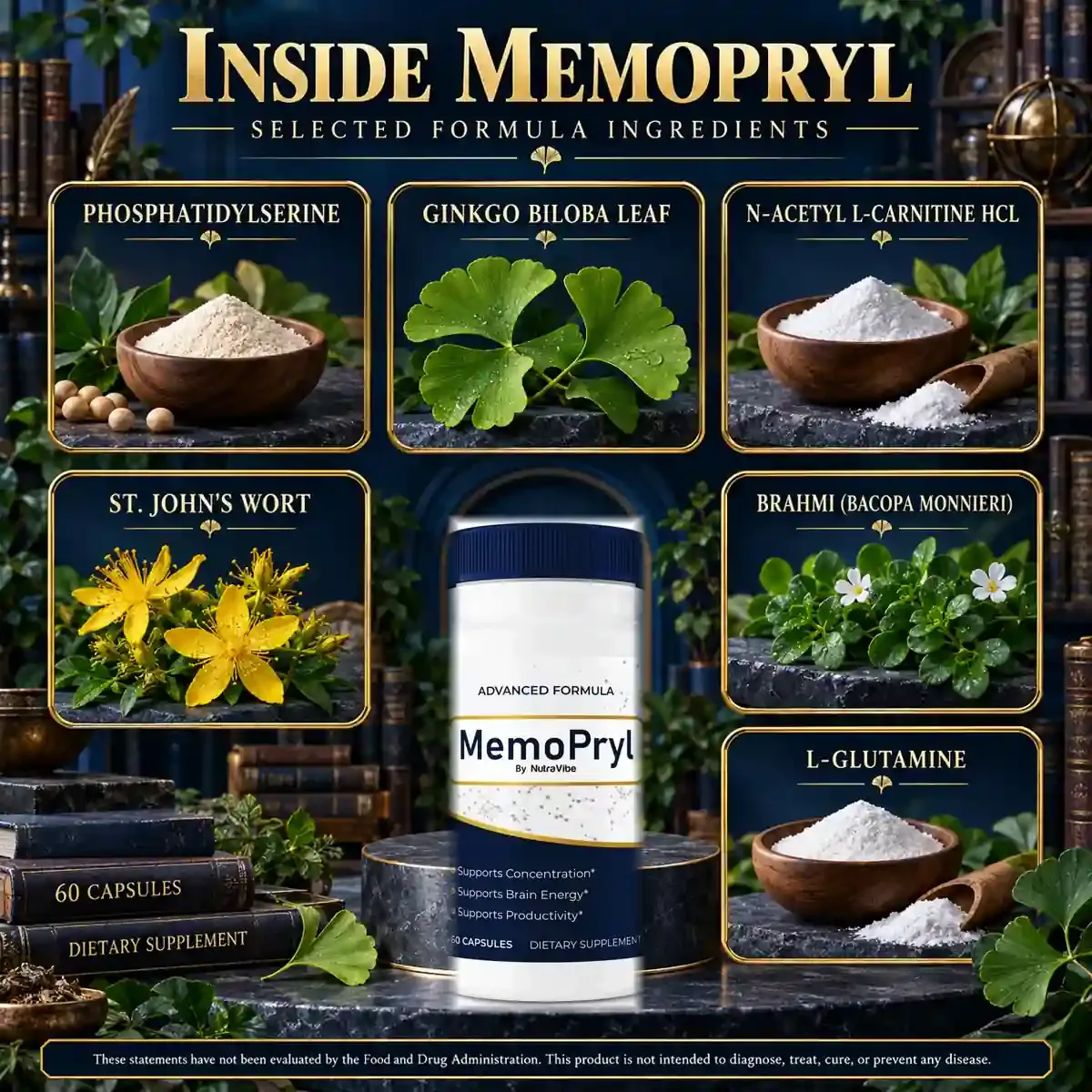
The six named ingredients and the dose each study used.
See ingredientsSupplement Facts
What the missing panel would show and what to read on your bottle.
Read moreHow to use
Following your label, building a daily habit and tracking a trial.
How to use itSide effects
St. John's wort interactions, ginkgo and bleeding, and stomach effects.
Safety detailsPricing
The 1, 3 and 6-bottle packs, with prices shown at checkout.
See packsGuarantee
The 60-day window, the refund call and return shipping.
Guarantee termsGlossary: what do the common terms mean?
| Term | Plain meaning | Where it shows up with Memopryl |
|---|---|---|
| Phosphatidylserine | A fat-like molecule in cell membranes, often made from soy. | The first named ingredient |
| Acetyl-L-carnitine | A form of carnitine, an amino acid derivative. | Listed as N-acetyl L-carnitine HCl |
| Brahmi | Another name for Bacopa monnieri. | Named as Brahmi (Bacopa monnieri) |
| Drug interaction | When one product changes how a medicine works. | St. John's wort has many |
| Serotonin syndrome | A serious reaction from too much serotonin activity. | A risk when St. John's wort meets some antidepressants |
| Qualified health claim | A claim FDA allows only with wording about weak evidence. | Phosphatidylserine's claim |
| Supplement Facts panel | The label box with serving size and amounts. | Not in our files for Memopryl |
| Structure-function claim | A claim about normal body function that the FDA does not review. | “Supports Concentration*” |
How are the guides researched and checked?
Start from the bottle
Product facts come from the Memopryl bottle, the retailer pack and brand graphics. Missing facts are marked “not published.”
Link every number
Each dose and finding points to its study or agency page, so you can check who took part and for how long.
Flag the limits
Small trials, older trials and gaps in the label are named in the piece that relies on them.
Date every edit
When a source or policy changes, the page is revised and its date moves forward.
Memopryl guides FAQ
Which Memopryl guide should I start with?
If the topic is new to you, start with the focus and brain energy guide. If you are already comparing products, go straight to the buying guide.
Do I need to pay or sign up to read the guides?
No. Every guide and article is free to read, with no account and no email address needed.
Who writes the guides?
The Memopryl Editorial Desk at Gomemopryl. We are the authorized U.S. retailer, not the maker, and we earn money when you buy through this site.
Are the guides medical advice?
No. They explain labels, studies and terms in plain words. Questions about your own health or medicines belong with your doctor or pharmacist.
Why do the guides not give a Memopryl dose?
The Supplement Facts panel was not in our files, so the serving size and amounts are not published. The guides tell you what to look for on your own bottle instead.
Which article matters most if I take medicine?
The St. John's wort article. It lists the medicine groups the herb is known to affect and the questions to bring to your pharmacist.
How often are the guides updated?
When a source, the label or a store policy changes. The date under each page title moves forward with every edit.
Ready to try Memopryl?
60 capsules per bottle, prices shown at checkout, and a 60-day money-back guarantee. Contains St. John's wort, so check your medicines first. Questions? Call +1 (302) 200-3480.