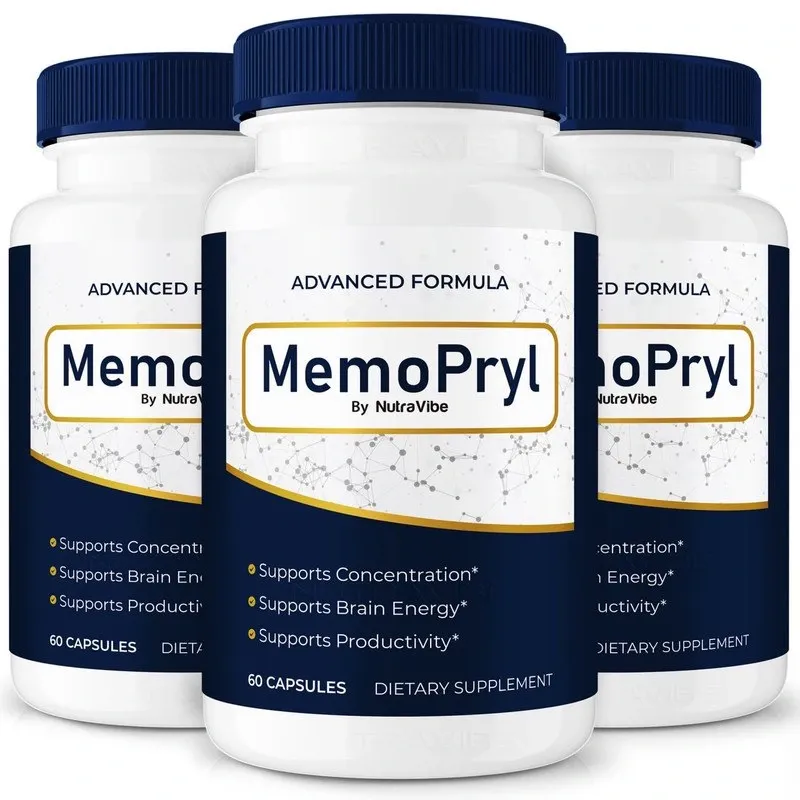
Memopryl Focus and Brain Energy Guide: Sleep, Breaks, Caffeine and Where Supplements Fit
Quick answerMost daily focus comes from five habits: steady sleep, short breaks, well-timed caffeine, regular movement and a medicine review. Supplements come after those. NCCIH finds no conclusive evidence that ginkgo prevents or slows decline, and the largest ginkgo trial (3,069 adults, about 6 years) found no dementia benefit. Memopryl is a 60-capsule add-on, and it contains St. John's wort.

What drives everyday focus and brain energy?
Everyday focus rests on a few plain habits. Sleep, breaks, caffeine timing, movement and your medicine list shape how clear you feel at 3 p.m. far more than any capsule does.
None of these habits needs a prescription or a budget. Start with one, keep it for two weeks, then add the next.
Steady sleep
A regular bedtime and wake time give your brain a predictable reset each night.
Short breaks
A few minutes away from the screen helps you return to a task with fresh attention.
Caffeine timing
Coffee early in the day can sharpen focus. Late cups can cost you the next morning.
Movement
A short walk or stretch breaks up long sitting and wakes you up.
Medicine review
A pharmacist can spot medicines or mixes that leave you drowsy.
Supplements last
A product such as Memopryl is an optional extra after the habits, never a stand-in for them.
How does sleep shape your focus the next day?
Sleep is the habit that decides how the next day feels. A short or broken night leaves most adults slower, more distracted and quicker to reach for sugar or coffee. Fixing sleep often does more for focus than anything you can buy.
Keep a steady schedule
Go to bed and get up at about the same time, weekends included. Your body learns the rhythm, and falling asleep gets easier. Big swings on Saturday and Sunday make Monday harder.
Protect the hour before bed
Dim the lights and put work email away. A cool, dark, quiet room helps. If your mind races, write tomorrow's to-do list on paper so it can wait until morning.
Notice the warning signs
Loud snoring, gasping at night or heavy daytime sleepiness can point to a sleep problem. Those signs are worth a doctor's visit, not a supplement.
How do short breaks help you concentrate longer?
Attention fades when you push through one long block of work. Short, planned breaks let you come back to the task with more energy. The trick is to take them before you feel drained.
A simple routine works well for desk jobs. Try it for a week and adjust the timing to your own work.
Pick one task
Close extra tabs and silence alerts. Work on a single task for a set block of time.
Stop on purpose
When the block ends, stand up. Look at something far away to rest your eyes.
Move for a few minutes
Walk to refill water, stretch your back or climb a flight of stairs.
Restart with a note
Before you sit down, write the next small step. It makes getting back on track faster.
When should you have caffeine for focus?
Caffeine can help you feel alert, but timing matters. A cup in the morning suits most adults. A cup late in the day can push back sleep and leave you foggier the next morning.
People react to caffeine very differently. Watch how your own sleep responds, and set your own cutoff time.
| Time of day | What usually works | Simple swap |
|---|---|---|
| Morning | Coffee or tea with breakfast suits most people | Drink water too, so thirst is not mistaken for fatigue |
| Midday | A second cup can help after a heavy lunch | Pair it with a short walk instead of a snack |
| Afternoon | Many people do better with a cutoff in the early afternoon | Switch to decaf or herbal tea |
| Evening | Late caffeine can delay sleep and hurt tomorrow's focus | Keep evenings caffeine-free |
| Energy drinks | Labels often stack caffeine from several sources | Read the label and count every source |
Why does movement lift brain energy?
Moving your body is one of the easiest ways to lift brain energy during a long day. Sitting for hours makes most people feel sluggish. A few minutes of motion can reset that feeling.
Small moves count
You do not need a gym session to feel the change. Take calls standing up, walk after lunch or use the stairs. Short bursts spread through the day add up.
Build it into the calendar
Put a short walk on your calendar like a meeting. Invite a coworker if that helps you keep it. Regular activity also supports better sleep, which feeds back into focus.
Can your medicines affect focus?
Your medicine list can affect how alert you feel. Some prescription and over-the-counter products can cause drowsiness, and some combinations add up. A yearly review with your pharmacist is a simple, free check.
Bring every bottle, including vitamins, herbs and sleep aids. Ask whether anything on the list could cause tiredness or brain fog, and whether the timing of any dose could change.
Supplements belong on the list
Never stop or change a prescribed medicine on your own. Supplements count as part of your medicine list too. Memopryl names St. John's wort, which weakens many medicines, and ginkgo, which may raise bleeding risk with blood thinners (NCCIH, St. John's Wort) (NCCIH, Ginkgo). Our post on St. John's wort and your medicines lists the main groups.
When do memory or focus changes need a doctor?
Some changes in memory or focus need a doctor, not a new habit or a supplement. The National Institute on Aging advises talking with a doctor about noticeable memory changes (NIA, memory and aging). It also urges caution with pills or supplements that promise to improve memory.
Book a visit if any of the signs below apply to you or someone close to you. Several causes of poor focus can be found and treated.
A change that keeps growing
Lapses that are more frequent this year than last, or that others have started to notice.
Daily tasks get harder
Trouble with bills, directions or work routines you used to handle with ease.
Mood or sleep shifts
Low mood, worry or poor sleep that lasts for weeks and drags on your focus.
A new medicine
Fog or drowsiness that began after starting or changing a medicine.
Memopryl is not a treatment for dementia, Alzheimer's disease, ADHD or memory loss. Its front label makes only three support claims, and the site disclaimer explains what that means.
What does research say about focus supplements?
Research on supplements for thinking is modest. NCCIH reports no conclusive evidence that ginkgo prevents or slows cognitive decline, and says direct evidence for natural products is lacking (NCCIH, supplements and cognition). The largest ginkgo trial, in 3,069 adults aged 75 and over, found that 240 mg a day did not lower dementia rates (DeKosky et al., 2008 (GEM)).
Some single ingredients have narrower findings. Bacopa at 300 mg a day for 12 weeks improved learning in 46 healthy adults (Stough et al., 2001). Phosphatidylserine was studied at 100 to 300 mg a day in older adults with memory complaints (Kato-Kataoka et al., 2010).
Why the rules matter
The FDA does not approve supplements before they are sold (FDA, Q&A on Dietary Supplements). In 2019 it warned 17 companies over illegal Alzheimer's claims (FDA, Alzheimer's claims, 2019). A product that promises to fix memory is a product to skip.
Where does Memopryl fit as a brain energy supplement?
Memopryl fits at the end of a focus plan, after sleep, breaks, caffeine and movement are in place. It is a capsule supplement for adults, sold as 60 capsules per bottle.
Its six named ingredients are phosphatidylserine, ginkgo leaf, N-acetyl L-carnitine, St. John's wort, bacopa and L-glutamine. The amounts are not published in our files, so no study dose can be checked against the bottle. The ingredients page covers each one.
St. John's wort is the point to weigh first. If you take any prescription, the side effects page is the place to start, before you order.
What does a focus-friendly workday look like?
Here is one way to combine the habits into a normal workday. Shift the times to match your own schedule.
- Wake-up
Get up at your usual time. Open the blinds and have water before coffee.
- Morning block
Do your hardest task first, with alerts off. Take a short break when the block ends.
- Lunch
Eat away from the desk and walk for a few minutes afterward.
- Early afternoon
Have your last caffeine of the day. Stand for calls where you can.
- Evening
Close the laptop, dim the lights and keep a steady bedtime.
If you still want a supplement after a few steady weeks, our focus supplement checklist shows what to check first.
Memopryl focus and brain energy FAQ
What helps focus most during a workday?
Steady sleep, short breaks, sensible caffeine timing and a bit of movement do most of the work. They cost little and do not interact with medicines.
When should I see a doctor about memory or focus?
The National Institute on Aging advises talking with a doctor about noticeable memory changes. A change that keeps growing, or that makes daily tasks harder, is a good reason to book a visit.
Does Memopryl contain caffeine?
Caffeine is not one of the six named ingredients. The full Supplement Facts panel is not published in our files, so read the label on your bottle to be sure.
Can my medicines affect my focus?
Some medicines, and some mixes of medicines, can make people drowsy or foggy. A pharmacist can review your list. Never stop a prescribed medicine on your own.
What does NCCIH say about supplements for thinking?
NCCIH says there is no conclusive evidence that ginkgo prevents or slows cognitive decline, and that direct evidence for natural products is lacking.
Is Memopryl safe with my medicines?
Check first. Memopryl names St. John's wort, which weakens many medicines, and ginkgo, which may raise bleeding risk with blood thinners. Ask your doctor or pharmacist before your first capsule.
How long should I give a focus supplement?
Keep a weekly note and judge it inside the 60-day money-back window. The bacopa trial ran 12 weeks, which is longer than that window, so decide with that in mind.
Ready to try Memopryl?
60 capsules per bottle, prices shown at checkout, and a 60-day money-back guarantee. Contains St. John's wort, so check your medicines first. Questions? Call +1 (302) 200-3480.