Is Memopryl a Nootropic? Brain Health, Cognitive Support and Brain Fog Explained
Quick answerPeople call Memopryl a nootropic, but the bottle never uses that word. It is a capsule supplement labeled to support concentration, brain energy and productivity. It has no caffeine among its six named ingredients, makes no brain fog or disease claim, and carries no trial of the finished product.
Key facts
The label first, then the category talk around it.
- The word nootropic does not appear on the bottle front. The claims are Supports Concentration, Supports Brain Energy and Supports Productivity.
- Memopryl is a capsule, 60 per bottle. It is not a drink.
- Caffeine is not one of the six named ingredients. The full other-ingredients line is not published here.
- No brain fog, memory loss, ADHD or mood claim is made.
- The six ingredients have uneven records: one clear result in healthy adults, two modest or weak ones, one mood herb and one with no memory data.
- How each ingredient is made, natural or lab-made, is not stated in our files.
- Persistent fog or memory change calls for a doctor.
Is Memopryl a nootropic?
It depends on what you mean. Nootropic is a popular word for products that people take hoping to sharpen thinking. The word has no place on the Memopryl label, yet many buyers file the product under it.
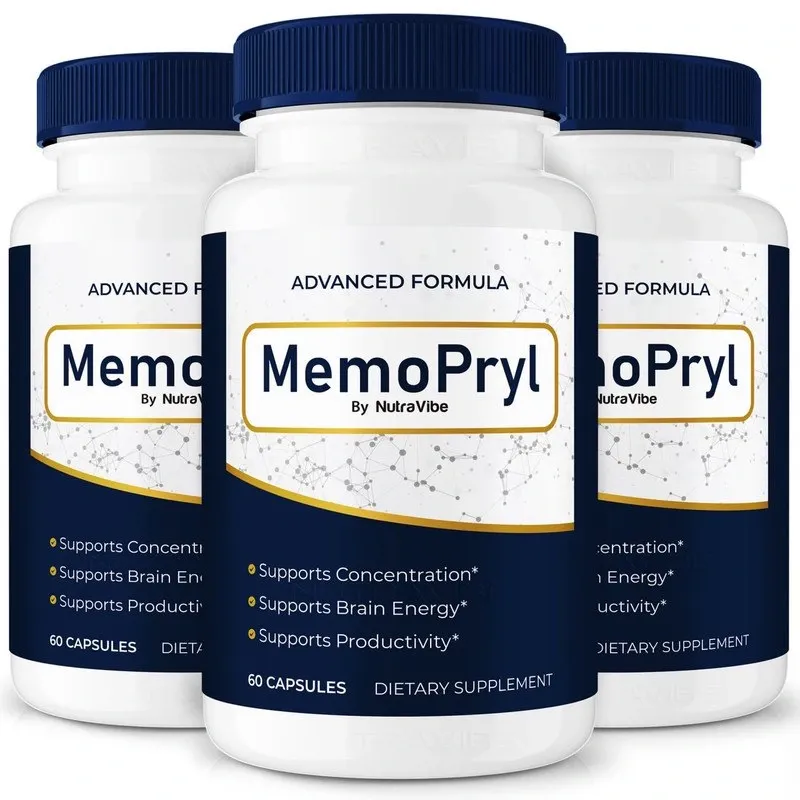
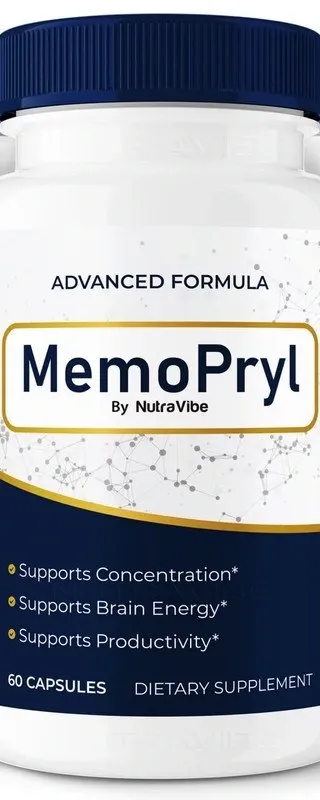
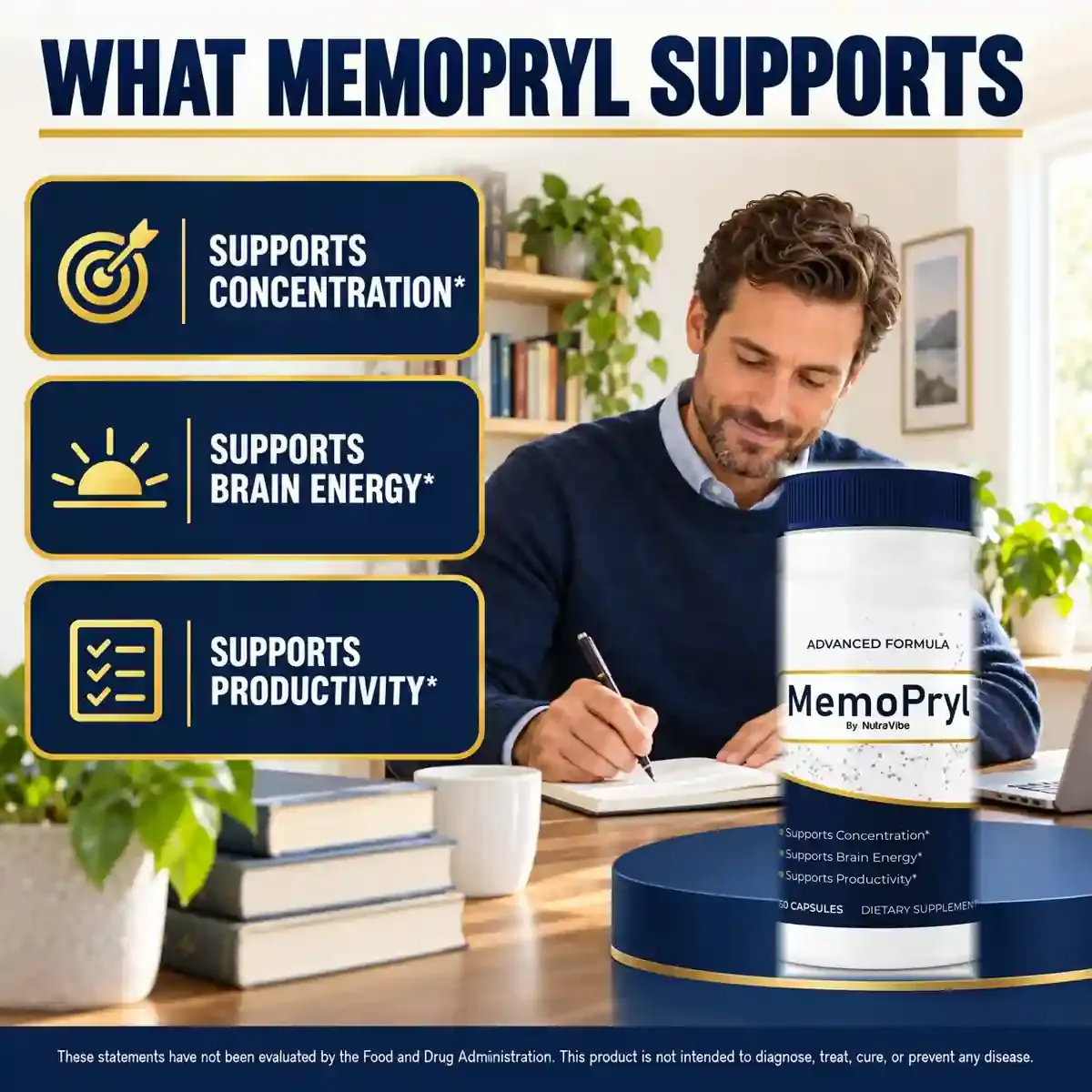
On the bottle, the language is more careful. Advanced Formula. Supports Concentration. Supports Brain Energy. Supports Productivity. Each claim carries an asterisk and the FDA note that it has not been evaluated.
So the short answer is that people use the word for it, but the label does not. We use plain words: a focus and brain energy capsule.
What does Memopryl claim for brain health and cognitive support?
Brain health and cognitive support are search words, not label words. Here is how they map to the three claims on the front.
| Search word | Closest label claim | What research on the ingredients shows |
|---|---|---|
| Cognitive support | Supports Concentration | Bacopa improved learning in healthy adults at 12 weeks. Other results were mixed or weak. |
| Brain health | Supports Brain Energy | Carnitine helps cells use fats for energy, but trials in memory impairment were weak. |
| Memory | None | No memory claim is made. Memopryl is not made to treat memory loss. |
| Productivity | Supports Productivity | No study has measured work output with these ingredients. |
How is Memopryl different from caffeine?
People often compare nootropics with caffeine. The honest difference here is simple. None of the six named ingredients is a stimulant like caffeine. Caffeine is not among them, and the full other-ingredients line is not published in our files, so check your bottle if you are sensitive.
That shapes what to expect. Brain energy on this label is not a quick lift. It points to steady support over weeks, if anything. The best-known result, for bacopa, appeared only at the 12-week check (Stough et al., 2001).
Caffeine has its own rules. A morning cup suits most adults, and a late cup can hurt the next day's focus. Our focus and brain energy guide covers timing.
Curious about the real label?
Each bottle holds 60 capsules with three support claims. Prices show at checkout, and the guarantee runs 60 days.
Earnings note: we earn money when you buy through the buttons on this site.
Is a nootropic drink different from a supplement capsule?
A drink and a capsule are different forms, and Memopryl is the capsule. Each bottle holds 60 capsules. We found no drink, powder or gummy version in our files.
With a drink, you tend to take the ingredients in liquid with whatever else is in it, such as sugar or caffeine. With a capsule, the label's other-ingredients line tells you what else is inside. Memopryl's line is not published here, so read it on your bottle.
Are the ingredients natural, or synthetic?
Searchers ask whether nootropics are natural, or lab-made. For Memopryl, the files do not say how each ingredient is made. We therefore will not call it natural or synthetic.
What we can say is what kind of thing each one is. Ginkgo, St. John's wort and Brahmi are plant-based. Phosphatidylserine is a fat-like molecule found in cell walls, and supplements are often made from soy. N-acetyl L-carnitine HCl is a salt form of acetyl-L-carnitine. L-glutamine is an amino acid.
Natural does not mean harmless. St. John's wort is a plant, and it changes how many medicines work.
Can Memopryl help with brain fog?
Memopryl makes no brain fog claim. Brain fog is a loose phrase, and it has many causes, such as short sleep, stress, a new medicine or a health condition. A capsule that supports concentration is not a fix for any of those.
If fog keeps growing, makes daily tasks harder, began after a new medicine, or comes with low mood or poor sleep that lasts weeks, book a doctor visit. Several causes can be found and treated (NIA, memory and aging).
Before any supplement, look at the basics: a steady sleep schedule, short breaks, sensible caffeine timing and a medicine review with your pharmacist.
How strong is the evidence behind the nootropic idea?
Modest. Federal health sources say there is no conclusive evidence that ginkgo prevents or slows cognitive decline, and that direct evidence for natural products and thinking skills is lacking (NCCIH, supplements and cognition). The biggest ginkgo trial followed 3,069 adults aged 75 and over and found no drop in dementia rates (DeKosky et al., 2008 (GEM)).
Bacopa has the cleanest result, in 46 healthy adults, and phosphatidylserine has a six-month trial in older adults with memory complaints. Both are single-ingredient studies. No trial of Memopryl itself has been published.
So the nootropic story rests on parts, not on the whole. That is a reason for a modest test, not for a rush.
Who might consider Memopryl, and who should not?
Healthy adults aged 18 and over who take no prescription medicine, can give it several weeks and already look after sleep and routine are the group the product suits.
Ask first if you take antidepressants, birth control, blood thinners, or heart, HIV, transplant, seizure, cancer or statin drugs, or if you are pregnant, nursing or facing surgery. Do not use it under 18.
Frequently asked questions
Is Memopryl a nootropic?
People file it under that word, but the bottle does not use it. The label claims support for concentration, brain energy and productivity.
Does Memopryl contain caffeine?
Caffeine is not one of the six named ingredients. The full other-ingredients line is not published here, so read your bottle.
Is Memopryl a drink or a capsule?
It is a capsule, 60 per bottle. We found no drink or gummy version in our files.
Can Memopryl treat brain fog or memory loss?
No. It makes no such claim. Noticeable changes in memory or focus need a doctor.
Are the ingredients natural?
Our files do not say how each one is made, so we do not use that label. Some are plant-based, and plants can still interact with medicines.
Is there a trial of Memopryl for memory?
No. The studies we cite tested single ingredients, one at a time.
Our view
Our view: nootropic is a handy search word and a poor label. We would sooner describe what is on the bottle than what the category promises.
The six ingredients have uneven records. One has a clear result in healthy adults, two have modest or weak ones, one is a mood herb with a long list of medicine interactions and one has no memory data. That is a mixed picture, and we say so.
Treat it as an optional extra after sleep, breaks and movement. This supplement is not FDA approved, and no supplement is.
Last updated .
Try a modest test with a way out
Check your medicines with a pharmacist first. Then see today's price and guarantee.
Earnings note: we earn money when you buy through the buttons on this site.