What Is Phosphatidylserine, and Why Does the FDA Limit Its Memory Claim?
Quick answerPhosphatidylserine is a fat-like molecule found in cell membranes. A trial in 78 adults aged 50 to 69 with memory complaints found higher memory scores at 100 or 300 mg a day. The FDA allows only a heavily qualified claim for it. Memopryl lists it, but the amount is not published.
Key facts
What the sources let us say about the first ingredient on Memopryl's list.
- Phosphatidylserine sits in the wall of every cell, and brain cells hold a lot of it.
- Supplements are often made from soy, and the trials used soy-derived phosphatidylserine.
- One trial gave 78 adults aged 50 to 69 with memory complaints 100 or 300 mg a day for 6 months.
- A smaller pilot gave 30 older adults 300 mg a day for 12 weeks, with no placebo group.
- The FDA lets sellers make a memory claim for it only with wording that admits the evidence is very limited.
- The Memopryl amount and the source of its phosphatidylserine are not published.
- No dietary supplement is FDA approved, and that includes Memopryl.
What is phosphatidylserine?
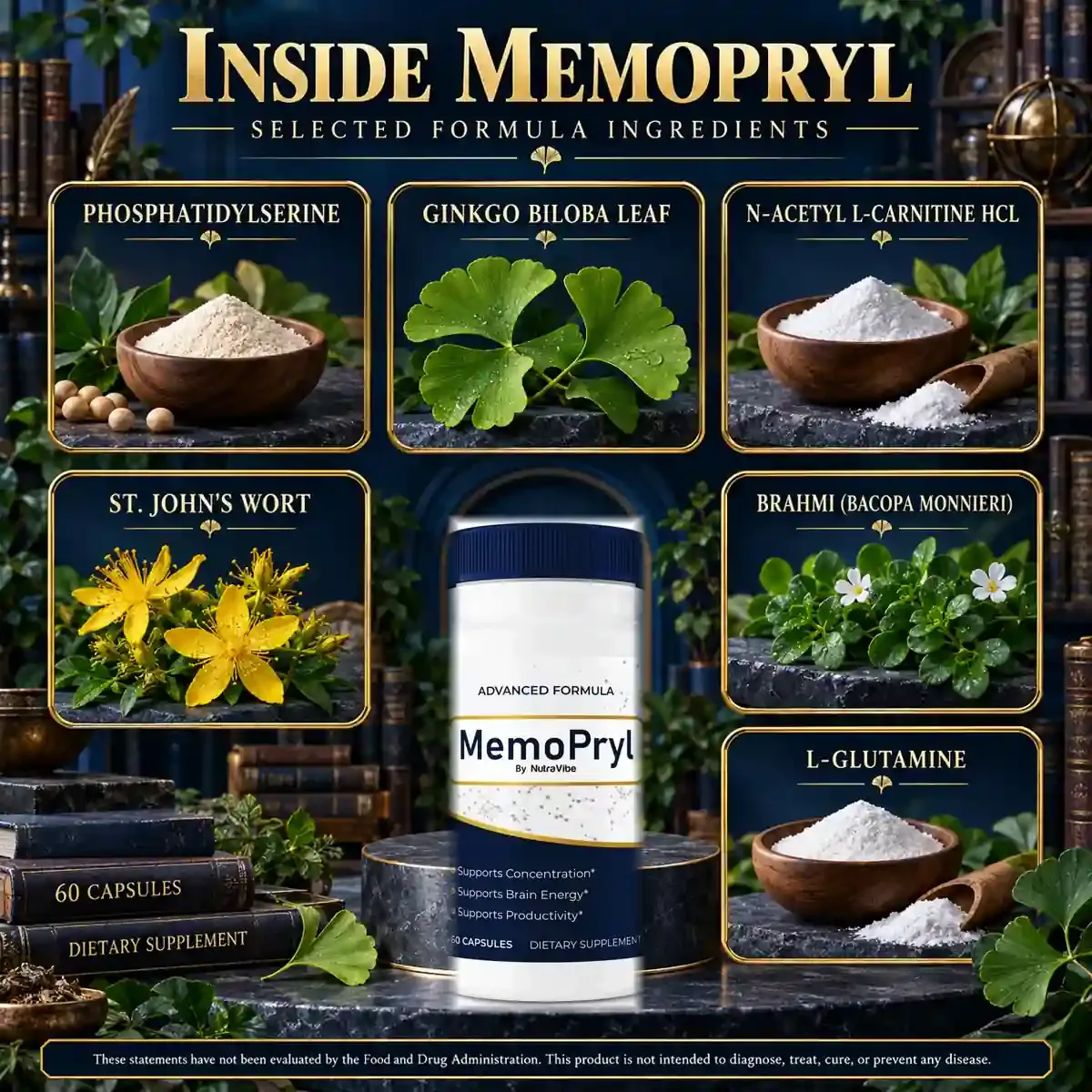
Phosphatidylserine is a fat-like molecule. It is part of the wall that wraps every cell in the body, and brain cells carry plenty of it. The brand's own graphic describes it as a phospholipid found in cell membranes.
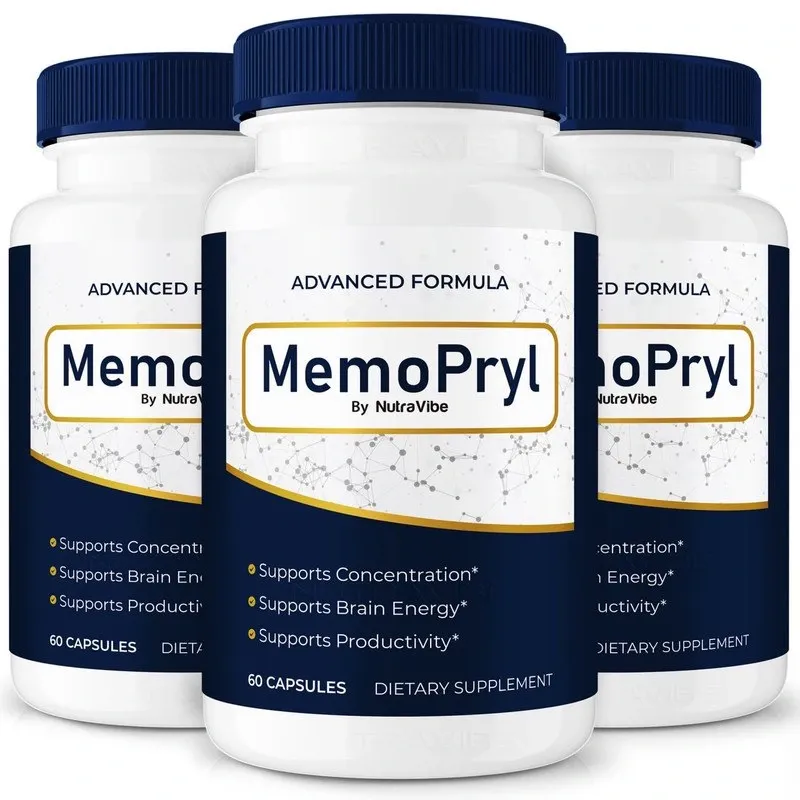
Supplements are often made from soy. It is the first of the six named ingredients in the Memopryl formula, which is why it is worth a closer look in any Memopryl supplement review.
The sources we hold report no side effects for it. That is a gap in the sources and not an all-clear, so the usual medicine check still applies to the capsule as a whole.
What did the two phosphatidylserine trials find?
Two studies carry the story. The larger one, by Kato-Kataoka and colleagues in 2010 (Kato-Kataoka et al., 2010), tested soy phosphatidylserine in Japanese adults who had memory complaints. The smaller one, by Richter and colleagues in 2013 (Richter et al., 2013), was a pilot.
| Detail | Kato-Kataoka, 2010 | Richter, 2013 (pilot) |
|---|---|---|
| People | 78 adults aged 50 to 69 with memory complaints | 30 older adults with memory complaints |
| Daily dose | 100 or 300 mg | 300 mg |
| Length | 6 months | 12 weeks |
| Placebo group | Not stated in our sources | No |
| Result | Memory scores rose, mostly in people who started lower | Scores rose from where they began |
A pilot with no placebo group carries less weight. People can improve over twelve weeks for many reasons, and without a comparison group you cannot tell which reason it was.
Want the full label picture?
The order page shows today's price, shipping and tax, and your bottle's own panel will show the phosphatidylserine line.
Earnings note: we earn money when you buy through the buttons on this site.
Why does the FDA limit the phosphatidylserine memory claim?
In 2003 the FDA wrote letters about a possible phosphatidylserine and memory claim (FDA, qualified health claims). It said a seller may use the claim only with strong qualifying words. The words say that research is very limited and preliminary, and that there is very little scientific evidence for the claim.
That is called a qualified health claim, and it is a weak form of permission. It is not an approval of the ingredient or of any product that contains it. The FDA does not approve dietary supplements before they are sold (FDA, Q&A on Dietary Supplements).
So, is Memopryl FDA approved? No. Memopryl's bottle does not make a phosphatidylserine claim at all. The front carries three support lines about concentration, brain energy and productivity, each with an asterisk that points to the standard FDA statement.
Do those results apply to a healthy adult at work?
Not directly. Both trials enrolled older adults who already had memory complaints. Memopryl is sold for healthy adults aged 18 and over who want focus support, and that is a different group.
Among Memopryl's six ingredients, only bacopa has a placebo-controlled result in healthy adults. Phosphatidylserine sits in the middle. It has a real trial, but not in busy workers.
Phrases such as memopryl brain health and memopryl cognitive support are search words, not label claims. There is one more detail worth keeping in mind. The gain in the larger trial was biggest in people who began with lower scores. Someone who starts with a strong memory may have less room to improve.
What should you check if you avoid soy?
The trials used soy-derived phosphatidylserine. Which source Memopryl uses is not published in the material we hold. Do not guess.
Turn the bottle
Find the Supplement Facts panel and the line called other ingredients.
Look for an allergen line
Soy, if present, is one of the major allergens a label should flag.
Ask if it is missing
If the panel is absent or hard to read, call the order desk at +1 (302) 200-3480 with your order ID and the lot number.
Do not start on a doubt
If the panel shows something you avoid, keep the bottle sealed and use the 60-day guarantee.
Does Memopryl match the studied phosphatidylserine dose?
Nobody outside the brand can say, because the amount is not published. The table puts the trial next to what we know about the capsule.
| Point | In the trials | In Memopryl |
|---|---|---|
| Daily amount | 100 or 300 mg | Not published |
| Source | Soy-derived | Not published |
| Length of use | 12 weeks to 6 months | No trial of the capsule |
| Who took it | Older adults with memory complaints | Healthy adults 18 and over |
Read your own panel on arrival and write the number next to this table. If the line shows a blend total instead of single amounts, you will not be able to separate phosphatidylserine from the rest, and that is worth telling your pharmacist.
How long might you wait before judging it?
The studies ran from 12 weeks to 6 months. The refund window is 60 days, and shipping days count inside it. So a Memopryl trial cannot copy a phosphatidylserine trial.
What you can do is keep a plain log. Rate your focus once a week, note your sleep and your coffee, and look for a trend and not a single good day. Buyers in the retailer's pack most often mention 3-4 weeks. The retailer supplied that figure, and it is not independently verified.
If memory changes are what worry you, a log is the wrong tool. The National Institute on Aging advises talking with a doctor about noticeable changes (NIA, memory and aging).
Frequently asked questions
What is phosphatidylserine?
A fat-like molecule found in the walls of cells, and plentiful in the brain. Supplements are often made from soy.
Does phosphatidylserine improve memory?
A trial in 78 adults aged 50 to 69 with memory complaints found higher memory scores at 100 or 300 mg a day for 6 months. The FDA allows only a claim that admits the evidence is very limited.
Is phosphatidylserine in Memopryl made from soy?
The source is not published. The trials used soy-derived phosphatidylserine, so check the panel on your bottle if you avoid soy.
How much phosphatidylserine is in Memopryl?
The amount is not published in our files. The studies used 100 to 300 mg a day, so compare that with your own panel.
Does the FDA approve phosphatidylserine?
No. The FDA does not approve dietary supplements. It allowed a heavily qualified claim in 2003, which is not an approval.
Are there side effects of phosphatidylserine?
Our sources do not list any for it. That is a gap in the sources. Ask a pharmacist about the whole capsule if you take medicine.
Our view
Our view: phosphatidylserine is a plausible ingredient with a thin evidence trail. The trials were real, but they were in older adults with memory complaints, and the FDA itself asks sellers to say how little is known. That should lower expectations a notch, not remove it from the formula.
What would raise our confidence is simple: a published panel with the amount and the source. Until then, the useful step is to read your bottle, write the number down and show it to a pharmacist.
This is general information and not medical advice. Memopryl is not FDA approved, and no supplement is. It does not treat, cure or prevent any disease. If you or someone close to you has noticeable memory changes, see a doctor first.
Last updated .
Would you like to see the terms?
Every pack carries a 60-day money-back guarantee, so you can read the panel on arrival and decide with the bottle in hand.
Earnings note: we earn money when you buy through the buttons on this site.