Ginkgo Biloba: What the Big Trials Found, and What It Means for Memopryl
Quick answerThe largest ginkgo trial, GEM, gave 240 mg a day to 3,069 adults aged 75 and over for a median of 6.1 years. Ginkgo did not lower dementia rates. NCCIH says it has not been shown to prevent or slow decline, and it may raise bleeding risk with blood thinners. Memopryl names ginkgo leaf, but its amount is not published.
What is ginkgo biloba, and why is it in Memopryl?
Ginkgo biloba is a tree with fan-shaped leaves, often planted along city streets. Supplements use an extract of the leaf. It is a common herb in memory and thinking supplements.
Why it is in Memopryl
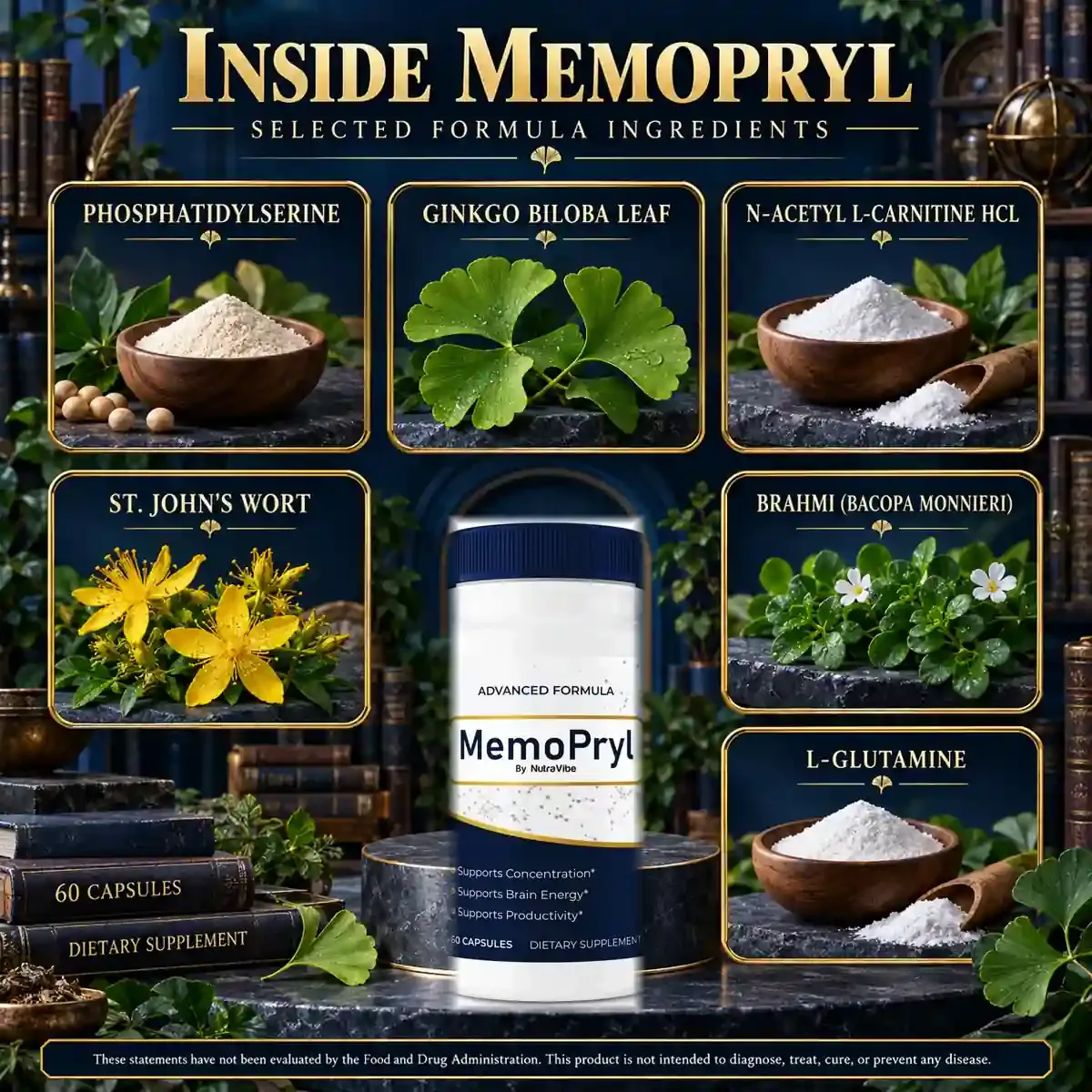
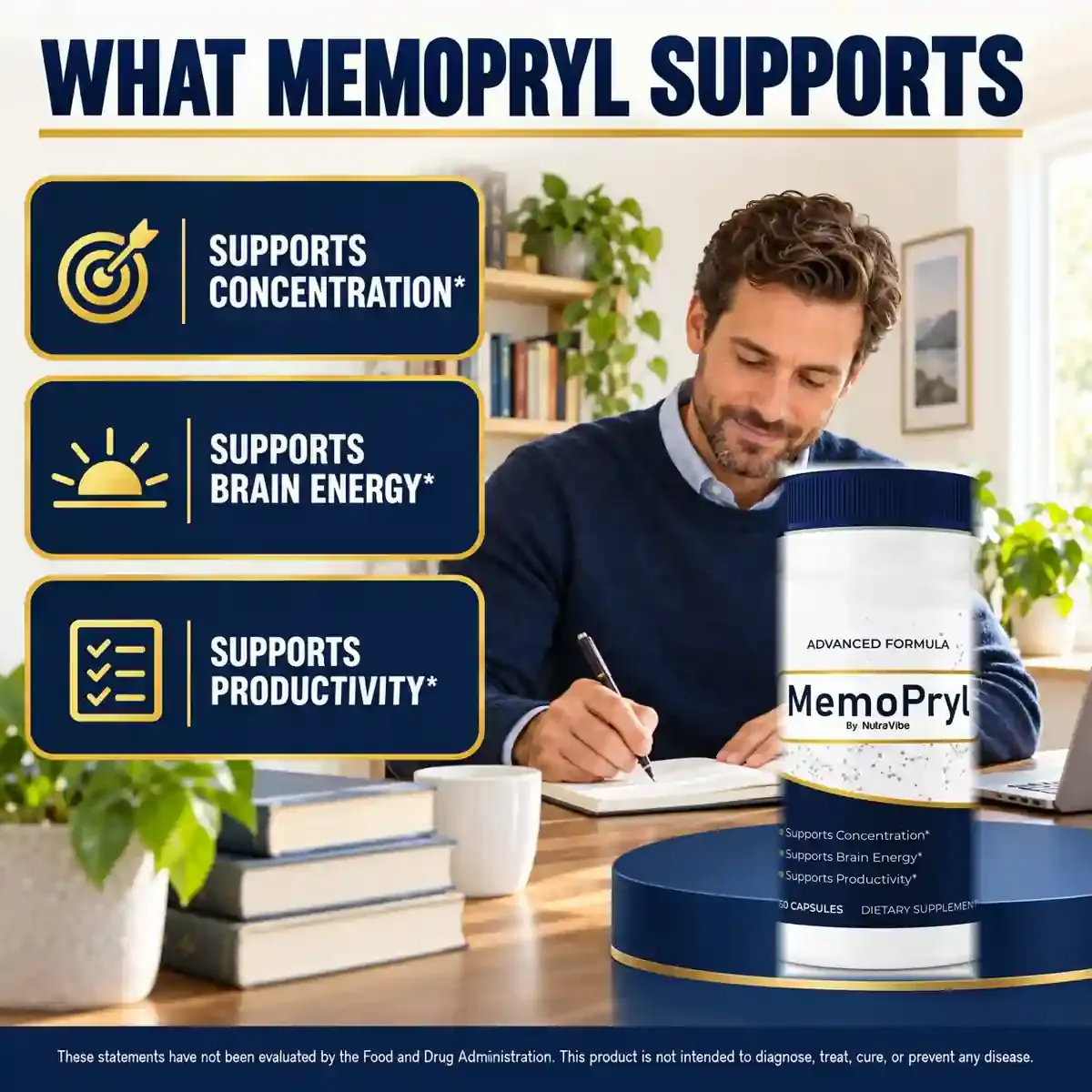
Ginkgo leaf is one of six ingredients named on the brand's "Inside Memopryl" graphic. The bottle front says the formula supports concentration, brain energy and productivity. It makes no claim about memory disease.
What we know about the amount
The ginkgo amount is not published in our files, since the Supplement Facts panel was not part of them. That shapes how the trial results below apply to the capsule.
What did the GEM ginkgo trial test?
GEM, short for the Ginkgo Evaluation of Memory study, is the largest ginkgo trial in older adults. It was published in JAMA in 2008 (DeKosky et al., 2008 (GEM)). The design was simple and strict, which is why its result carries weight.
| Trial detail | What GEM did |
|---|---|
| People | 3,069 adults aged 75 and over |
| Daily dose | 240 mg of ginkgo extract a day |
| Comparison | A placebo group took look-alike pills |
| Length | A median of 6.1 years |
| Main question | Would ginkgo lower the rate of dementia? |
A placebo group matters because memory scores drift over time for many reasons. Comparing two similar groups shows whether the herb itself made a difference.
What did the GEM trial find?
GEM found that ginkgo did not lower dementia rates. People who took 240 mg a day for about six years developed dementia at similar rates to those on placebo (DeKosky et al., 2008 (GEM)). For a question this large, that is a clear answer.
Why the size of the trial matters
Small studies can show a result by chance. A trial with more than 3,000 people, followed for years, is much harder to fool. That is why reviewers lean on GEM when they discuss ginkgo.
What the result does not say
GEM looked at dementia in adults 75 and over. It did not test focus at work in younger adults, and it did not test blends. Those are separate questions that GEM leaves open.
Know the facts, then decide on Memopryl
60 capsules per bottle, prices at checkout and a 60-day money-back guarantee. Check ginkgo and St. John's wort with your pharmacist first.
What does NCCIH say about ginkgo and memory?
NCCIH, the federal center for complementary health research, sums up the evidence in two short points. Ginkgo has not been shown to prevent or slow dementia (NCCIH, Ginkgo). More broadly, there is no conclusive evidence that ginkgo prevents or slows cognitive decline (NCCIH, supplements and cognition).
NCCIH also says direct evidence for natural products in this area is lacking. That view matches the National Institute on Aging, which urges caution with supplements that promise better memory (NIA, memory and aging).
When to see a doctor instead
Memory changes you or your family notice deserve a doctor's visit, not a supplement trial. Memopryl is not a treatment for dementia, Alzheimer's disease or memory loss. Our focus and brain energy guide covers when to see a doctor.
Does ginkgo raise bleeding risk?
Ginkgo may raise bleeding risk when combined with blood thinners such as warfarin (NCCIH, Ginkgo). The concern is extra bruising or bleeding that is hard to stop. It matters most for people who already take drugs that affect clotting.
Before a procedure
Tell your surgeon or dentist about every supplement you take, including ginkgo, before any planned procedure. They may ask you to pause it.
Ginkgo is not the only herb to check
Memopryl also names St. John's wort, which weakens warfarin and many other medicines (NCCIH, St. John's Wort). Our post on St. John's wort and your medicines lists the groups to check.
Blood thinners and ginkgo
If you take warfarin, another blood thinner or daily aspirin on a doctor's advice, ask your doctor before taking any product with ginkgo. Never stop a prescribed blood thinner on your own.
How does the GEM trial compare with the Memopryl label?
Setting GEM beside the Memopryl label shows how far apart the two are. The trial tested one herb at a known dose for years. The capsule mixes six ingredients at amounts we cannot see.
| Detail | GEM trial | Memopryl |
|---|---|---|
| Ginkgo amount | 240 mg a day | Not published in our files |
| Other ingredients | None; ginkgo alone | Five others, including St. John's wort |
| Length of use | Median 6.1 years | No trial of the capsule has been published |
| Who | Adults aged 75 and over | Adults 18 and over |
| Goal | Prevent dementia | Support concentration, brain energy and productivity |
| Result | No drop in dementia rates | Not tested |
Because the amount is missing, no one can say whether a serving is near 240 mg or far below it. The Supplement Facts page explains what is and is not published.
What can the big ginkgo trials not tell you?
Big trials answer big questions well, but they leave gaps. It helps to be clear about what GEM can and cannot tell a busy adult shopping for focus support.
Different age group
GEM studied adults 75 and over. Most people buying focus support are younger.
Different goal
GEM asked about dementia, not daily concentration or energy.
Single herb
GEM used ginkgo alone. Blends mix herbs that may act differently together.
Known dose
GEM used 240 mg. Without a label amount, the capsule cannot be matched to it.
For the other named ingredients and their studies, see the ingredients page.
How do the other Memopryl ingredients' studies compare?
Ginkgo has the biggest trial of any Memopryl ingredient, but not the most positive one. The other named ingredients were studied in smaller groups, at doses the label does not let us check.
Bacopa
In 46 healthy adults, 300 mg of bacopa extract a day for 12 weeks improved learning rate and memory consolidation compared with placebo (Stough et al., 2001). The gains showed up only at the 12-week mark.
Phosphatidylserine
In 78 adults aged 50 to 69 with memory complaints, 100 or 300 mg a day for 6 months raised memory scores, mostly in those who started lower (Kato-Kataoka et al., 2010). The FDA allows only a heavily qualified claim for it (FDA, qualified health claims).
Acetyl-L-carnitine
A Cochrane review of 16 trials found no evidence to recommend it for routine use in dementia (Hudson & Tabet, 2003 (Cochrane)). Trials used 1.5 to 3 g a day (NIH ODS, Carnitine).
Why do ginkgo ads still hint at memory protection?
Ginkgo still appears in ads that hint at protection from memory loss. Those hints do not match the trial evidence. Supplement makers may say a product supports a normal function, but they may not claim it treats or prevents a disease.
The FDA does not approve supplements before they are sold (FDA, Q&A on Dietary Supplements). In 2019 it warned 17 companies selling more than 58 products with illegal Alzheimer's claims (FDA, Alzheimer's claims, 2019). If an ad for any ginkgo product promises to stop dementia, walk away.
What to look for instead
Plain support claims with an asterisk, a readable Supplement Facts panel and clear medicine warnings. Our focus supplement checklist scores these points one by one.
What should a Memopryl buyer do with these findings?
If you are thinking about a product with ginkgo, a few steps keep the decision grounded in facts.
Set your expectations
Ginkgo did not prevent dementia in GEM. Treat it as one part of a blend, not a memory fix.
Read the panel
Look for the ginkgo amount on your bottle. Our article on reading a label without amounts shows what to check.
Check your medicines
Ask a pharmacist, especially if you take a blood thinner or any prescription.
Keep a short log
Note focus and sleep each week, and judge the product inside the 60-day refund window.
Ginkgo biloba trials FAQ
What is ginkgo biloba?
Ginkgo is a tree with fan-shaped leaves. Extracts of the leaf are sold as supplements, often for memory or thinking.
What was the GEM trial?
The Ginkgo Evaluation of Memory study. It gave 3,069 adults aged 75 and over either 240 mg of ginkgo a day or a placebo, for a median of 6.1 years.
Did ginkgo prevent dementia in the trial?
No. Dementia rates were not lower in the ginkgo group than in the placebo group.
Does ginkgo slow memory decline?
NCCIH says there is no conclusive evidence that ginkgo prevents or slows cognitive decline.
Is ginkgo safe with blood thinners?
It may raise bleeding risk with blood thinners such as warfarin. Talk to your doctor or pharmacist before taking any product that contains it.
How much ginkgo is in Memopryl?
Not published. The Supplement Facts panel was not in our files, so the ginkgo amount cannot be compared with the 240 mg used in GEM.
Can Memopryl prevent dementia?
No. Memopryl makes only three support claims: concentration, brain energy and productivity. It does not treat or prevent any disease.